Step-by-Step Guide to Classic Spaghetti Carbonara
Spaghetti carbonara is one of the most celebrated dishes of Roman cuisine, yet it is often misunderstood outside of Italy. The dish relies on a handful of simple ingredients — eggs, pecorino cheese, guanciale, black pepper, and pasta — but the technique required to transform them into a creamy, cohesive sauce demands attention and care. Many home cooks encounter the problem of scrambled eggs, which occurs when the heat is too high or the timing is off. Understanding how temperature and texture interact is essential for achieving the desired result.
This guide breaks down the process of making traditional carbonara without cream or butter, focusing on the precise methods that help maintain the integrity of the egg and cheese emulsion. From ingredient selection to the final plating, each step is explained in a neutral, instructional manner. The aim is not to promise a perfect outcome, but to clarify the factors that influence the final texture and flavor of the dish.
By approaching carbonara as a study in heat control and ingredient compatibility, cooks can develop a reliable approach that works in a variety of kitchen settings. The following sections outline the necessary components, equipment considerations, and the sequence of actions that lead to a well-emulsified sauce.
Understanding the Ingredients
Every component in carbonara plays a specific role in the structure and taste of the sauce. Guanciale, which is cured pork cheek, provides fat and a subtle savory depth that differs from pancetta or bacon. The fat renders slowly during cooking, creating the base that will later bind with the egg mixture. Pecorino Romano, a hard sheep’s milk cheese, contributes saltiness and a granular texture that helps thicken the sauce. Freshly cracked black pepper adds pungency and a slight heat that balances the richness of the eggs and fat.
Eggs form the heart of the sauce. In a traditional carbonara, only the yolks are sometimes used, but many recipes incorporate whole eggs for a more stable emulsion. The proteins in the egg coagulate when exposed to heat, which is why controlling the temperature of the pasta and the pan is critical. If the eggs become too hot too quickly, they form curds rather than a smooth coating. The pasta itself — typically spaghetti, though rigatoni or fettuccine can be used — should be cooked al dente, as the residual starch in the cooking water aids in binding the sauce.
Water from the pasta pot is another key ingredient. The starchy liquid helps thin the sauce and encourages it to cling to the noodles without becoming oily or separate. The type and age of the cheese, the freshness of the eggs, and the quality of the pork all contribute to variations in the final dish. Recognizing these variables allows cooks to adjust their approach rather than following a rigid formula.
Equipment and Preparation
The choice of cookware influences heat distribution and the ability to control temperature. A large, heavy-bottomed skillet, such as a stainless steel pan from Kitchen Craft, provides even heat and reduces the risk of hot spots that could cause the eggs to cook unevenly. A pot for boiling pasta, a colander, and a mixing bowl for combining eggs and cheese are the other essentials. A wooden spoon or silicone spatula is useful for stirring the pasta and sauce together, as these materials do not conduct heat excessively.
Preparation begins before any heat is applied. The guanciale should be sliced into thin strips or small cubes. The pecorino is grated finely, and the eggs are cracked into a bowl and beaten until the yolks and whites are fully combined. At this stage, the grated cheese is mixed into the eggs to form a thick paste. Some cooks add a small amount of black pepper to the egg mixture as well. Having all ingredients measured and ready is particularly important for this dish, because the sauce comes together in the final minute of cooking and does not allow time for pauses.
A separate bowl with a fine-mesh strainer or a ladle for pasta water should be kept nearby. The water used for boiling the pasta is reserved just before draining, and it is added to the egg mixture in small increments to temper it before combining with the hot pasta. This step reduces the risk of scrambling the eggs when they encounter the heat of the pan.
The Cooking Process and Heat Control
The core technique in carbonara is managing the temperature of each component so that the eggs never exceed the point of coagulation. The guanciale is cooked over medium-low heat until the fat renders and the meat becomes crisp but not burnt. Once done, the heat is turned off, and the pan is set aside. The pasta is boiled in generously salted water until al dente. While the pasta cooks, a small amount of hot water is whisked into the egg and cheese mixture to warm it gradually. This tempering raises the temperature of the eggs without causing them to cook, and it also thins the paste so it can coat the pasta more easily.
When the pasta is ready, it is transferred directly from the boiling water to the pan with the rendered guanciale using tongs or a slotted spoon. Residual heat from the pan and the pasta will begin to warm the noodles. The heat under the pan remains off at this point. The egg and cheese mixture is then poured over the pasta, and the contents are tossed vigorously. The goal is to emulsify the fat from the guanciale, the starchy pasta water, and the egg mixture into a creamy sauce. If the pan is too hot, the eggs will scramble. If it is too cold, the sauce will be thin and runny. Adjusting by adding more pasta water, one tablespoon at a time, can help achieve the desired consistency.
Precise heat control is achieved by relying on the residual warmth of the cooked pasta and the pan rather than direct flame. If the sauce appears too thick or begins to clump, a few additional splashes of pasta water and continued tossing can restore the emulsion. The entire process of combining and tossing should take no more than one to two minutes. The final sauce should coat each strand of pasta evenly, with a silky, flowing texture that is neither watery nor stiff.
Common Pitfalls and How to Navigate Them
One of the most frequent issues is the formation of lumps or curds in the sauce. This occurs when the eggs are exposed to a temperature above roughly 70°C (160°F). To avoid this, the pan must be removed from heat before adding the egg mixture. Even a burner set to low can generate enough direct heat to cause scrambling. Another common problem is a sauce that separates into oily and watery layers, often caused by insufficient emulsification. Adding the pasta water gradually while tossing helps create a stable mixture that holds together.
Some cooks find that the sauce becomes too thick after a few minutes. This can happen because the eggs continue to set as they cool, or because too little pasta water was used. Adding another tablespoon of warm water and tossing again can restore fluidity. Conversely, a sauce that is too thin may need additional cheese or a brief return to very low heat while stirring constantly. However, reheating carries a risk of scrambling, so it is generally better to adjust the liquid balance at the start.
The texture of the guanciale also matters. If it is cooked too quickly over high heat, the fat may not render fully, leaving greasy bits that do not integrate into the sauce. Cooking it slowly allows the fat to liquefy and become part of the emulsion. Likewise, using a cheese that is too finely grated can cause clumping, while cheese that is too coarsely grated may not dissolve into the eggs. A fine microplane or the smallest holes of a box grater work well for pecorino.
Serving and Final Considerations
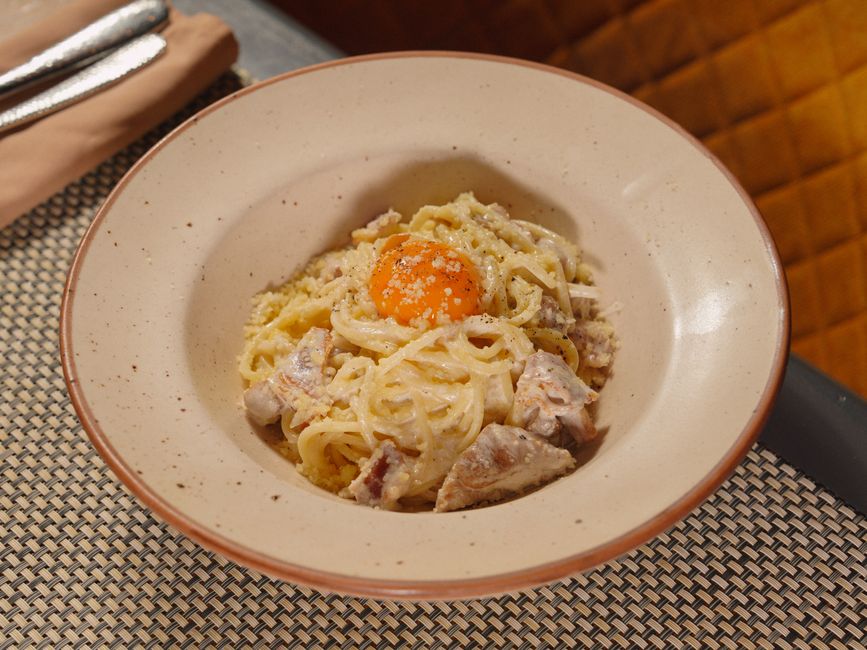
Carbonara is best served immediately after it is tossed, as the sauce continues to set as it cools. Plating in warmed bowls helps maintain the ideal temperature and texture. An additional dusting of pecorino and a generous crack of black pepper on top provide a final layer of flavor and visual contrast. The dish does not benefit from resting or reheating, so portions should be served directly from the pan.
The approach described here is one of many variations used in different regions and households. Some cooks add a small amount of whole egg versus yolk, and others prefer to finish the sauce with a knob of butter, though that departs from tradition. The essential principle remains the same: the sauce is an emulsion of egg, cheese, fat, and starch, stabilized by careful temperature management. By understanding the roles of each ingredient and the behavior of heat during the final mixing, cooks can adapt the technique to suit their own kitchens and preferences.
Exploring carbonara is an exercise in patience and observation rather than speed. The process rewards those who pay attention to small changes in texture and consistency. With practice, the method becomes intuitive, and the result is a plate of pasta that is rich, satisfying, and distinctly Roman in character.